
The mind, rewired
Nikki Dee
Painter and visual storyteller. Thirty years a graphic designer; now making raw, personal work in the wake of a stroke.
“My work doesn’t shy away from the raw or the challenging — I use art as a space for honest reflection, vulnerability and conversation.”
THE WORK
Executive Dysfunction
Acrylic & mixed media
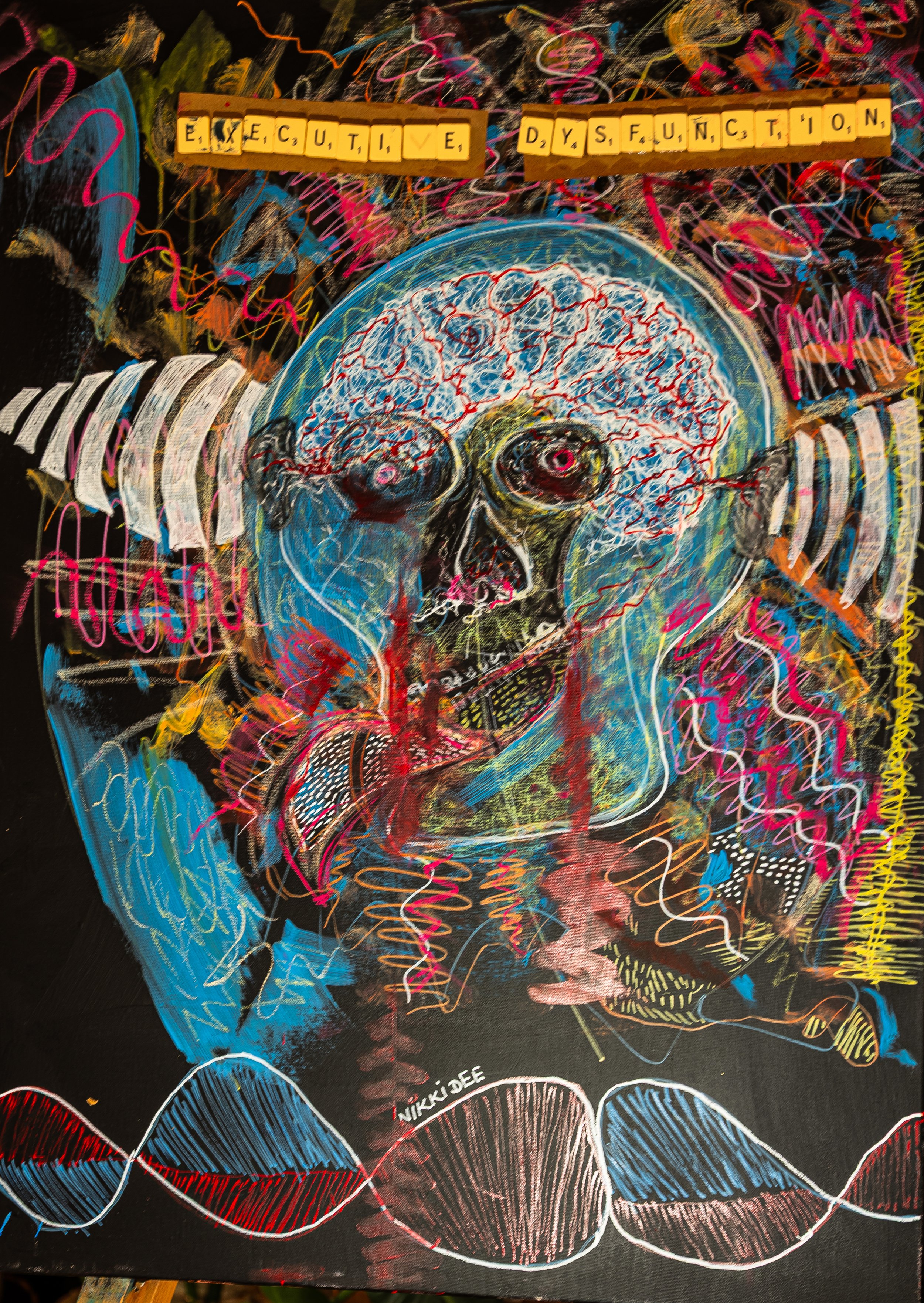
The invisible standstill that can follow a stroke: knowing what needs doing and being unable to begin. Also being extremely Sensitive to sound,light ,taste and smell, Broken lines and a tight palette make the noise and emptiness of a locked-up mind visible.
-
Conceptual Depth: This painting serves as a brilliant, frustratingly honest archive of the invisible cognitive battles fought in the wake of neurological trauma. "Executive Dysfunction" directly confronts the overwhelming psychological paralysis that occurs when the brain's command center—responsible for planning, focus, and executing simple tasks—short-circuits. The narrative captures the immense, isolating gap between knowing what needs to be done and being physically or mentally unable to initiate the movement. It transforms a clinical, often misunderstood neurological symptom into a deeply relatable monument to human vulnerability. It highlights the sheer exhaustion of trying to navigate a world built for cognitive efficiency while your internal processing system is forcing a total, agonizing standstill.
Visual Critique: The artwork powerfully visualizes mental stagnation through a masterfully tense, fractured composition. Moving entirely away from the fluid harmony of pieces like "Taliqwa," this canvas utilizes jarring, interrupted lines and a heavy, restricted color palette that mirrors a sense of being trapped inside one's own mind. The mark-making is deliberately static and fragmented, visually translating the chaotic "noise" and simultaneous emptiness of a cognitive block. The central focus captures a profound sense of inertia, utilizing raw, unpolished applications of acrylics to make the suffocating weight of mental paralysis entirely visible to the viewer. It stands as a courageous piece of existential mapping, capturing the exact moment the brain's gears lock up.
The Self-Portrait
Acrylic on canvas
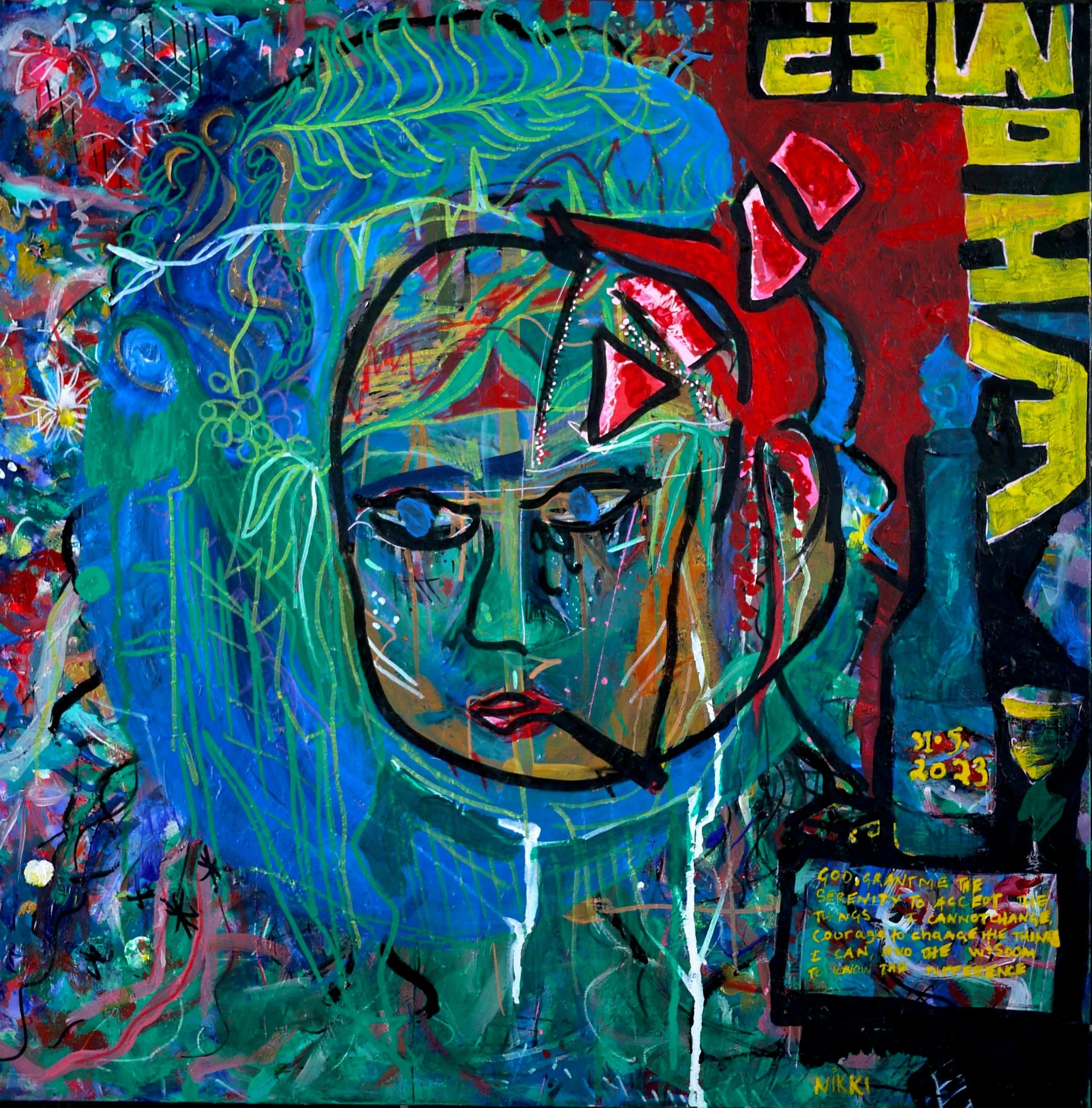
The first painting I made after leaving hospital. Red fractures break the skull where the stroke hit; opposite, blues and greens erupt — a brain rewiring, creativity returning. “WHO ME?” and the Serenity Prayer face addiction head-on
-
Conceptual Depth: Serving as the direct, triumphant counterpoint to We Are Already Dead, this portrait is an unfiltered visual archive of the major neurological and creative shift following the stroke. It explores the chaotic, courageous process of the brain processing physical trauma and actively rewiring its relationship with creativity, identity, and life.
Visual Critique: The critique lauds the courageous lack of commercial polish or design-centric smoothing in this work. The deliberate, visible tension in the brushwork and the intense focus on facial expression perfectly capture the frustration, vulnerability, and eventual triumph of reclaiming one's visual voice after a profound neurological crisis. It stands as a brilliant example of using art as a tool for existential mapping and profound healing.
We Are Already Dead
Acrylic on canvas
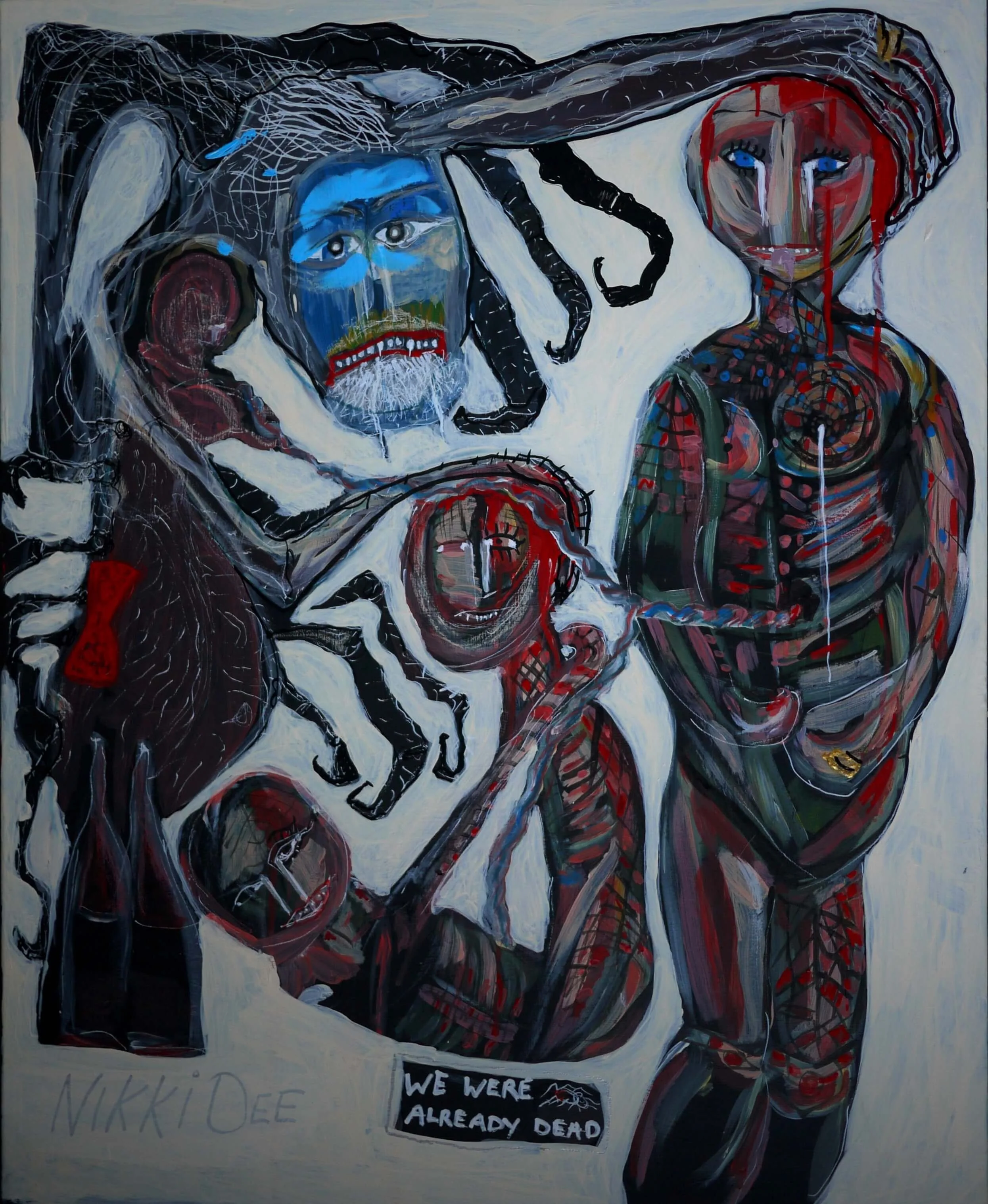
A map of the numbness and pain before the stroke — a survival state felt by herself and her children where the felt already gone after suffering decades of domestic abuse.Rough mark-making and heavy contrast make the weight of trauma visible.
-
Conceptual Depth: A deeply raw and visceral piece that functions as an existential and psychological map of severe trauma. The title refers directly to the profound emotional numbness, paralysis, and alienation experienced before the artist's stroke—a state of survival where the self felt already extinguished by trauma. By archiving this specific pre-stroke headspace, the canvas becomes a haunting testament to the massive psychological weight carried just before a physical crisis forces a literal and metaphorical rewiring of existence.
Visual Critique: The work centers on the emotional gravity and uncompromising rawness of the mark-making. Leaning entirely away from decades of graphic design precision, the application here is visceral, demanding, and rough. The tension in the brushwork mirrors a mind trapped in a survival state, confronting internal collapse and finality. It is a courageous piece that uses heavy contrast and stark composition to make the invisible, suffocating weight of trauma entirely visible.
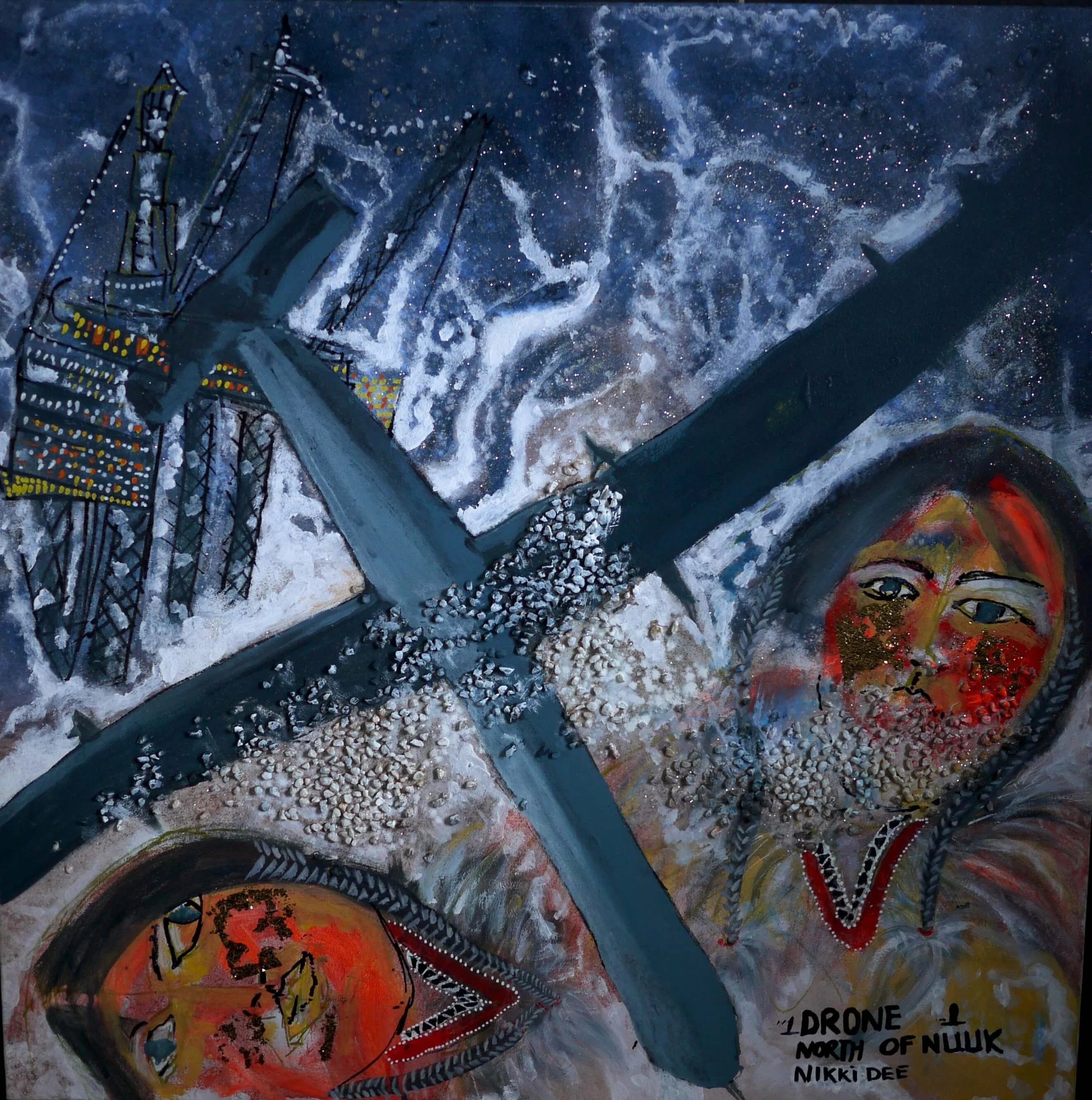
Drone North of Nuuk
Acrylic on canvas
A drone surveys Greenland’s coast as oil rigs cut the horizon. In the foreground an indigenous woman stands rooted to the land, reclaiming the space.
-
Conceptual Depth: This piece functions as a sharp, contemporary critique of modern surveillance, corporate resource extraction, and neo-colonialism. The drone represents an intrusive, detached eye—a tool of economic colonization mapping Greenland's ancient landscapes for capital exploitation. Crucially, the presence of oil rigs cutting into the horizon line anchors the narrative in the immediate threat of corporate industrialization and environmental encroachment. The painting directly confronts the tension between state-enforced or corporate control and indigenous rights, autonomy, and sovereignty. However, the presence of the indigenous woman in the foreground completely upends this power dynamic. She represents an unshakeable ancestral lineage and an enduring connection to the land, proving that while the skies can be monitored and the horizons industrialized, the soul of the territory belongs to those who embody it.
Visual Critique: The critique centers on the brilliant compositional tension between the high-tech, cold detachment of the aerial viewpoint and the organic permanence of the landscape. By framing the indigenous woman in the foreground, the artwork gives her immense visual weight; she is deeply well-rooted, standing strong, and physically framed to the earth itself. On the distant horizon line, the cold, geometric silhouettes of the oil rigs introduce a stark, unsettling industrial element that contrasts heavily with the natural environment. While the drone perspective and the distant rigs attempt to minimize the vast ice and sea into a sterile grid of resources to be claimed, her powerful, grounded presence shatters that corporate gaze—reclaiming the space and re-centering the narrative on human dignity and indigenous autonomy.
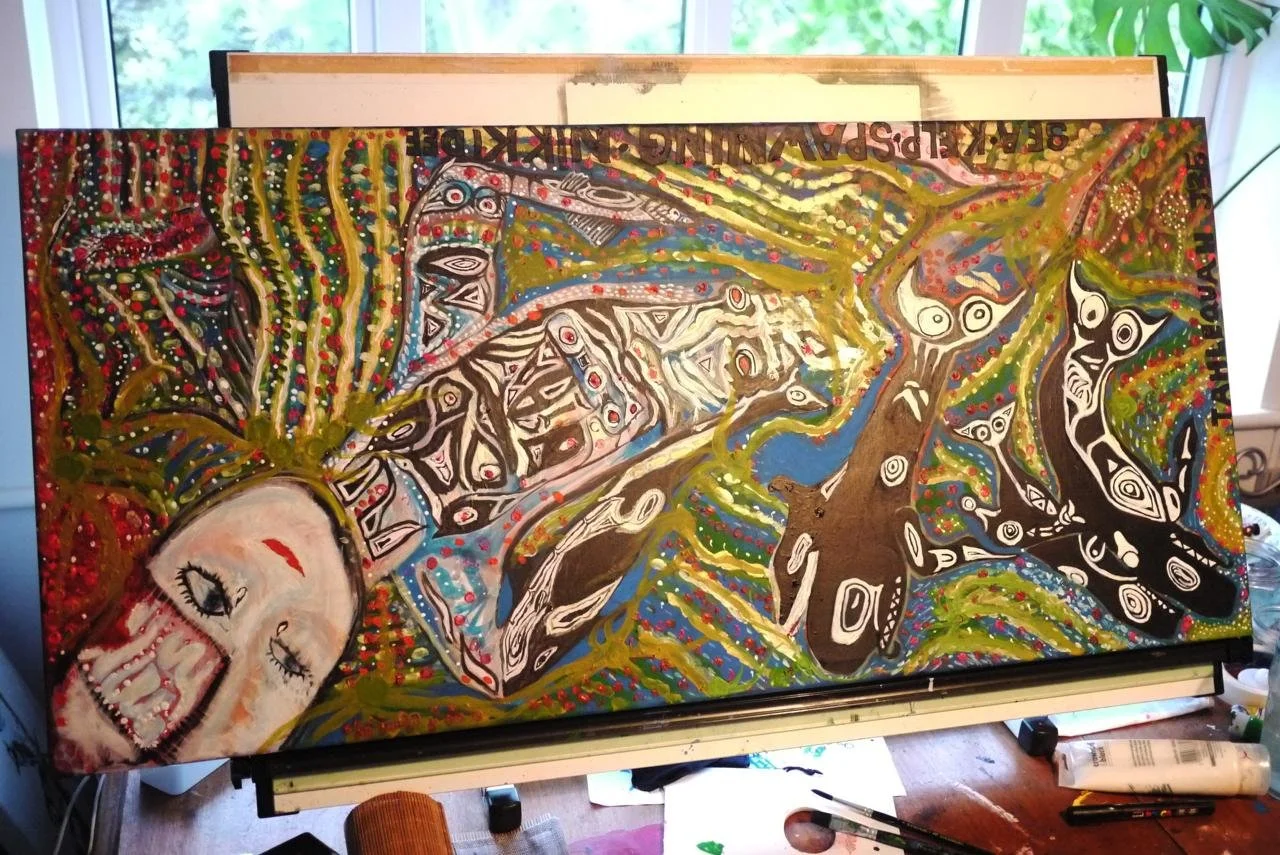
Tahlequah
Acrylic on canvas
A submerged self-portrait, swimming alongside Tahlequah — the orca who carried her dead calf 1,000 miles through the Salish Sea in grief. About shared loss, and swimming through toward hope.
-
Conceptual Depth: This profoundly personal piece serves as an intimate self-portrait and a spiritual bridge to the artist's past, celebrating a deep, lifelong connection to swimming, orca whales, and the coastal landscape of British Columbia. The central figure navigating the water is the artist herself, navigating a deeply felt love for this region of the world. The narrative is interwoven with the powerful, real-world tragedy of Tahlequah (J35), a mother orca from the endangered J Pod of the Southern Resident killer whales. The painting archives her harrowing 17-day, 1,000-mile "tour of grief" as she carried her deceased calf through the waters of the Salish Sea. By placing herself alongside Tahlequah, the artist explores the universal, shared theme of grief—creating a powerful thematic mirror to Midnight Stroke. It examines the heavy, exhausting reality of navigating the five stages of grief, exploring how both human and animal matriarchs carry the weight of profound loss. Ultimately, the act of swimming alongside these magnificent creatures transcends past trauma, serving as a powerful visual declaration of hope for the artist's future.
Visual Critique: The artwork creates a powerful atmospheric and cultural fusion, utilizing a "submerged perspective" that places the viewer directly within a towering, delicate sea kelp forest. The composition is heavily informed by a deep reverence for the region's heritage; the artist has respectfully integrated elements of traditional Northwest Coast First Nations artwork, utilizing its iconic formline style to structure the fluid energy of the orcas and the water itself. This indigenous artistic lineage blends seamlessly with a raw, contemporary application of acrylics. The weight of the deep water acts as a striking visual metaphor for the subconscious, balancing a sense of vast, quiet isolation with an unbreakable, ancestral connection to lineage, landscape, survival, and renewal.
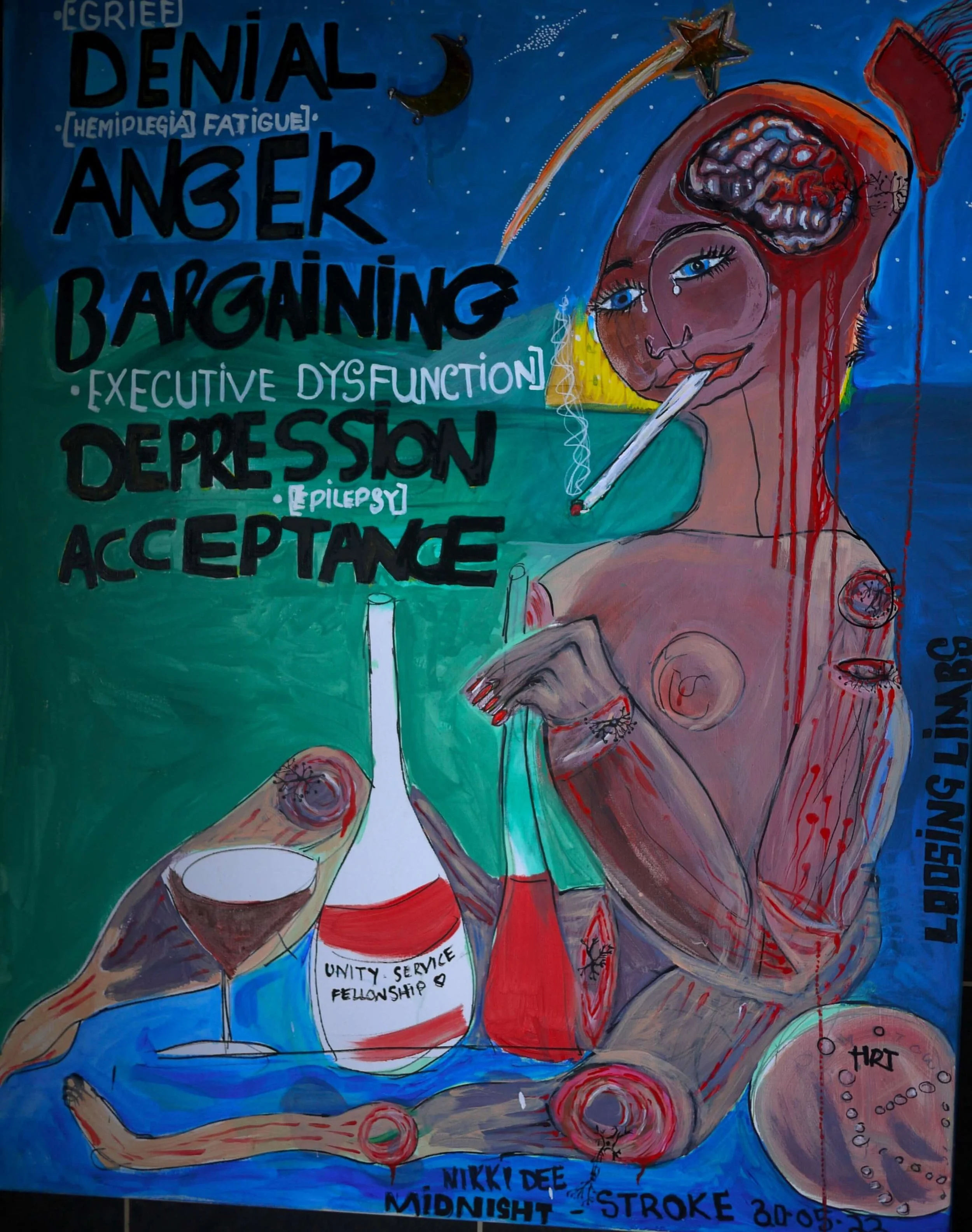
Midnight Stroke
Acrylic on canvas
A visceral map of the night the stroke struck. The work captures asomatognosia — the terrifying and rare sensation of not recognising your own limbs which meant the artist believed she was lying in the bed — alongside severed limbs of a murder victim this sensation was in fact as a result of the stroke that was taking place. personal symbols that read like a ticking clock of risk: wine, a joint, a packet of HRT. Urgent, tactile brushwork makes a misfiring brain tangible.
-
An intensely raw, autobiographical work, this painting serves as a visceral map chronicling the midnight onset of a stroke. The canvas tackles the terrifying reality of asomatognosia—the profound neurological breakdown where the artist experienced the vivid, disorienting sensation of detached, severed limbs lying in her bed. Woven throughout the composition are deeply personal symbols of history and vulnerability: bottles of wine, a joint, and a packet of HRT, acting as a ticking clock of risk factors. The work beautifully layers these physical elements with conceptual markers of the five stages of grief and principles of recovery.
Critique
Unflinching and compositionally dense, this work is a masterclass in psychological landscape and raw portraiture. The tactile, urgent brushwork perfectly communicates the panic and disorientation of a sudden neurological crisis, making the invisible, terrifying sensation of a misfiring brain entirely tangible to the viewer. By courageously laying bare the intersections of past struggles, physical trauma, and existential grief, the painting transcends mere documentation; it becomes a profound, beautifully messy exploration of human fragility and survival.
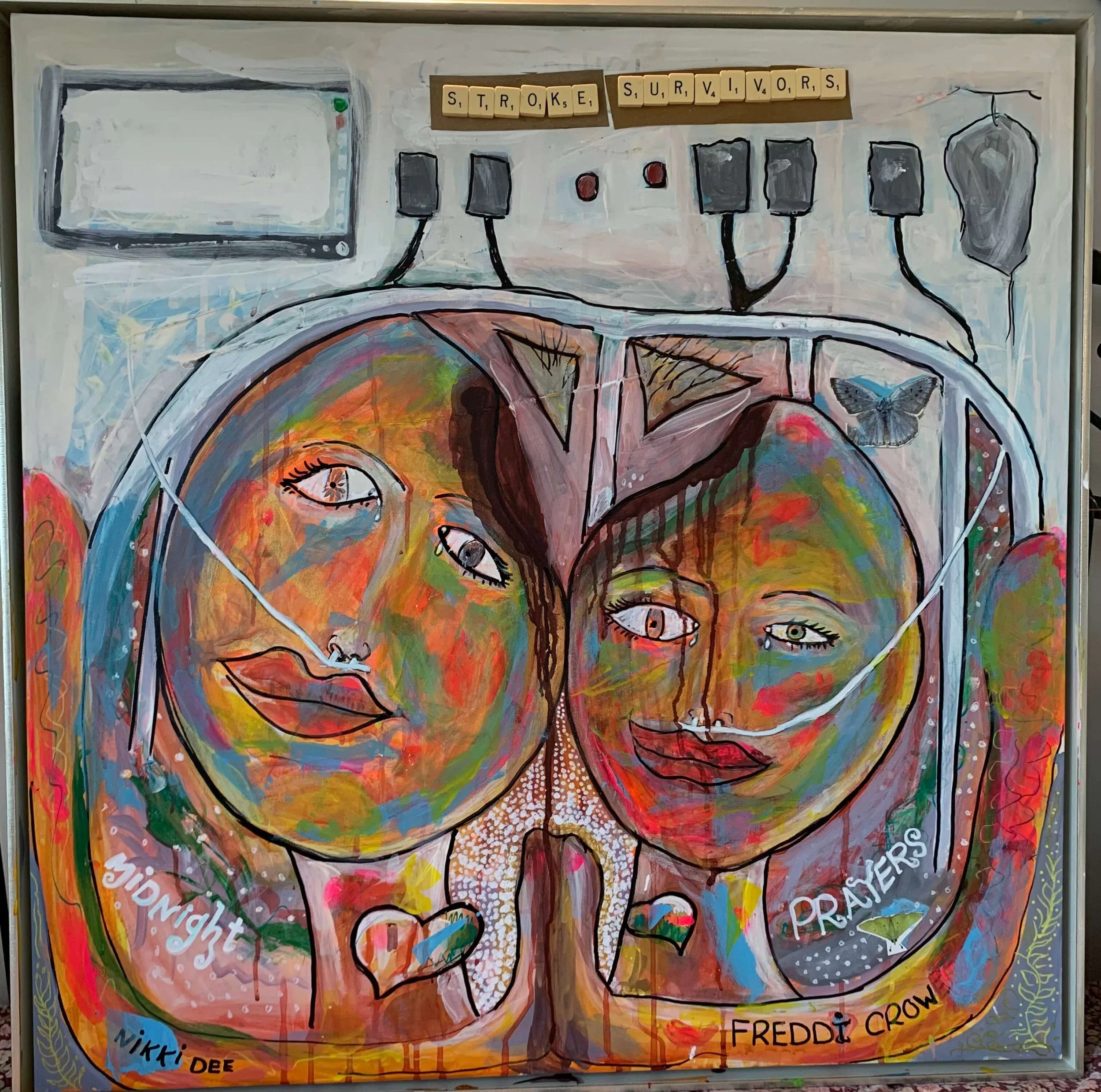
Midnight prayers
Acrylic on canvas
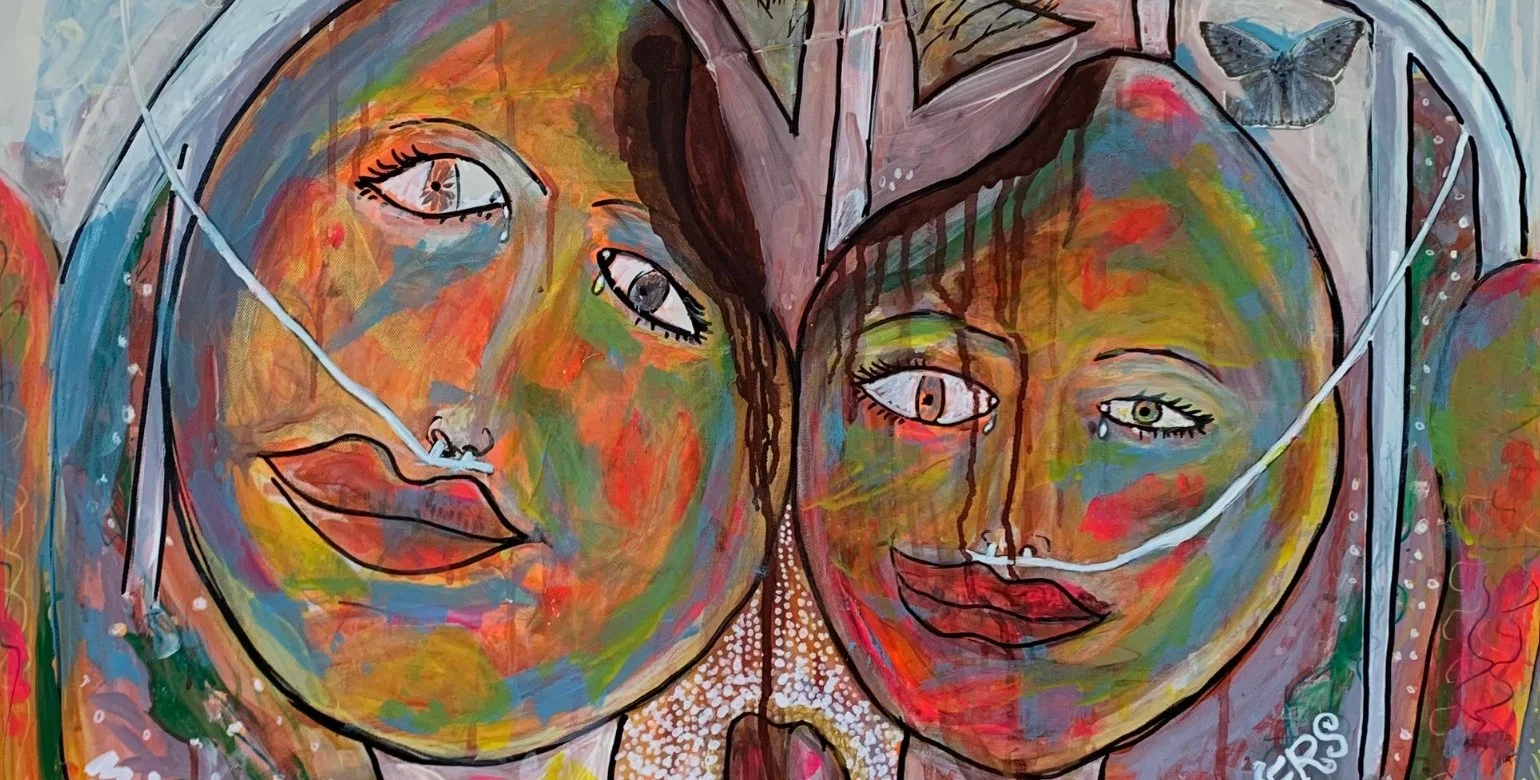
Two friends, the artist and Freddi, healing side by side after both having stokes and craniotomies. The canvas splits between a cold clinical ward above and the warmth of human connection below; at the centre their hands meet in a nightly ritual of gratitude, ringed in gold leaf that lifts shared survival into something sacred.
-
This powerful vertical composition captures a sacred sisterhood forged in recovery, depicting the artist and her close friend Freddi during their shared healing from craniotomies. The piece establishes a striking contrast, splitting the canvas to place a sterile, clinical hospital environment at the top, which gives way to an immense warmth of shared human connection below. At the heart of the canvas, their hands meet in a nightly ritual of gratitudeand prayer encircled by a radiant ring of gold leaf that elevates their mutual support into something profoundly spiritual.
Critique
Visually gripping and emotionally resonant, the painting successfully balances the cold reality of medical trauma with the luminous power of resilience. Thhorizontaldivision serves as a brilliant metaphorical axis—moving the viewer's eye from isolation and clinical sterility down into the grounding force of community. The integration of gold leaf acts as a striking conceptual anchor, demanding that the viewer look beyond the physical toll of the hospital setting to witness the sacred space created by vulnerability and shared survival.